
Licensed exterior house painters
Exterior House Painting in Adelaide & South Australia
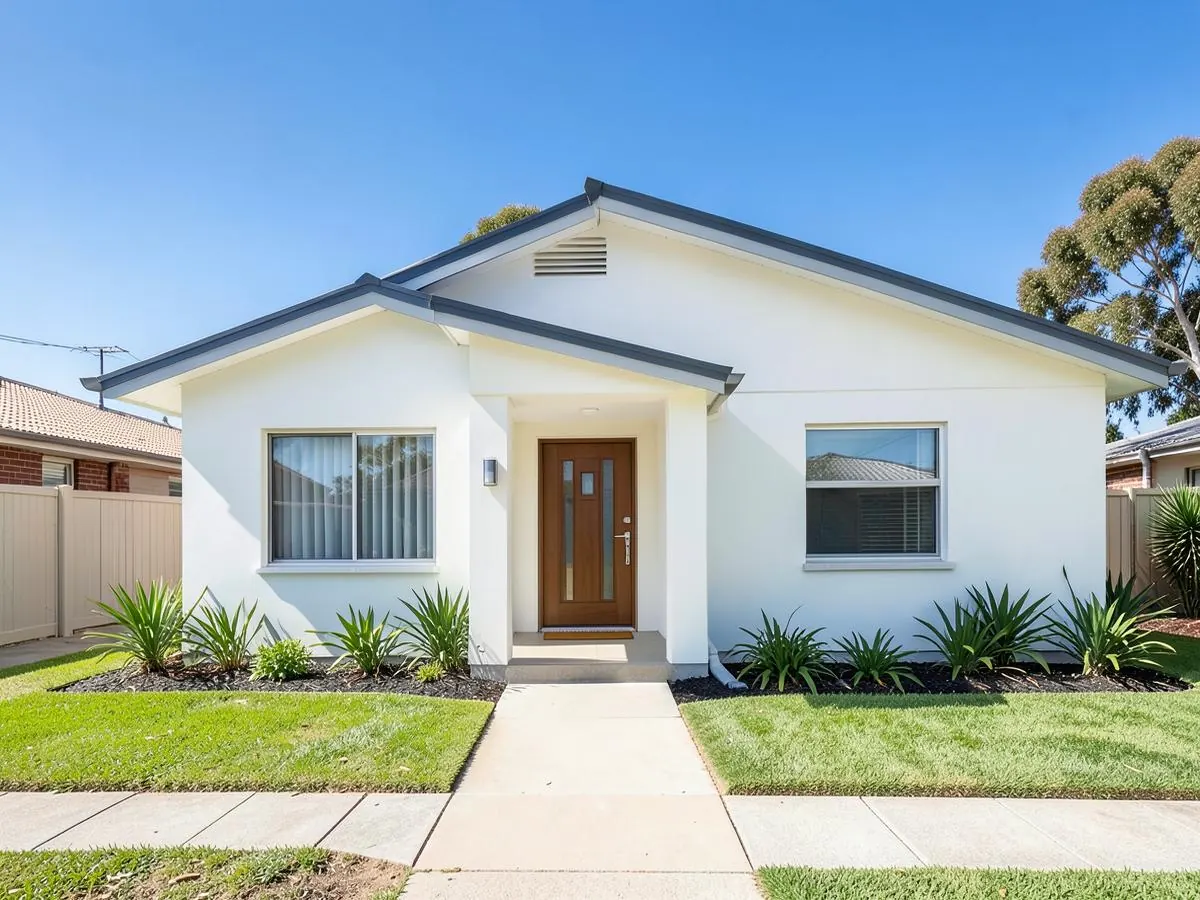
Exterior house painting protects render, brick, weatherboard, fibro, timber and lightweight cladding from the sun, salt and seasonal movement that South Australian homes face every year. SA Painting Professionals repaints exteriors for homeowners, landlords and builders across Adelaide and all of South Australia. We wash, scrape, fill and prime before any colour goes on, use UV-resistant 100% acrylic topcoats, and schedule the work around the weather so every coat cures properly and the finish lasts.
- Licensed and insured
- Free itemised quotes
- Trade-quality paints
What's included
- Pressure washing
- Scraping, sanding and feathering
- Crack repair on render and masonry
- Timber repairs and caulking
- Rust treatment and metal priming
- LicensedLicensed & fully insured
- FreeItemised, no-obligation quotes
- 1,890+SA suburbs & localities serviced
- Trade-qualityPaints and coatings on every job
Overview
Exterior House Painting done properly
An exterior repaint usually starts because something is failing: chalky, faded render, peeling weatherboards, hairline cracks that let water in, or timber windows and fascias going grey where the old paint has broken down. Sometimes it is simply time for a new look before a sale. Either way the sequence is the same. The house is pressure washed to remove dirt, chalk and mould, loose paint is scraped and sanded back to a firm edge, cracks and gaps are filled and caulked, bare and rusted areas are primed, and then two coats of 100% acrylic exterior paint go on. Gutters, downpipes, fascias, eaves, doors and windows are done as part of the job, not left as an afterthought.
The South Australian climate is hard on paint. Summer days over 35°C and high UV break down binders and pigments, so cheap or old paint chalks and fades within a few years. Dark colours on weatherboard and steel run far hotter than pale ones and are more prone to blistering and movement. Much of the Adelaide plains sits on reactive clay that swells and shrinks with the seasons, cracking render at movement points. Coastal suburbs from Semaphore to Sellicks and the peninsulas cop salt spray and blown sand. A good exterior system accounts for all of that: flexible fillers and membrane coatings on cracked render, corrosion-inhibiting primers on steel, and UV-resistant acrylic topcoats everywhere.
Good exterior painting looks simple from the street and shows its quality up close. Edges where the wall meets the eaves, trims and downpipes are cut in straight. There are no drips on the brickwork below a painted fascia, no overspray on the windows and no paint on the paving. Caulked gaps are smooth and paintable rather than lumpy. Weatherboards are coated right into the laps. Peeling areas have been feathered so the old edges do not telegraph through the new coat. We work to AS/NZS 2311, the Australian guide to the painting of buildings, and prepare properly because preparation, not the topcoat, decides how long the job lasts.
Timing follows the weather. Exterior acrylics need surface temperatures roughly between 10°C and 35°C and no rain for several hours after application, so in summer we start early and follow the shade around the house, and in winter we paint the sunny sides in the middle of the day and avoid coating late in the afternoon when dew forms. Gardens are covered, windows and paving are masked, and ladders, planks or a mobile scaffold are set up so the crew can reach two-storey walls and gable ends safely. We keep a tidy site and pack up every day so your driveway and paths stay usable.
Get a quote for exterior painting
Send a few photos or book a site visit. We reply within one business day with a free, itemised written quote and no obligation.
Request a quoteWhat's included
What our exterior painting service includes
The work that goes into the job before, during and after the paint goes on. Every item is spelled out on your quote.
Pressure washing
The whole exterior is pressure washed to remove dirt, chalking, cobwebs and mould before anything else happens. Mouldy or shaded walls get an anti-mould wash first. Fibro sheeting on older homes is cleaned gently by hand instead, never water blasted or sanded.
Scraping, sanding and feathering
Loose and flaking paint is scraped back to a firm edge and the edges are sanded so they do not show through the new coat. Chalky surfaces are washed and bound with a sealer. Sound old paint is left in place and overcoated, which is also the safe approach on pre-1970 homes where lead paint is likely.
Crack repair on render and masonry
Hairline cracks in render are raked out and filled with a flexible exterior filler. Wider or recurring cracks at movement points are bridged with an elastomeric membrane coating that stretches with seasonal ground movement rather than reopening the following summer.
Timber repairs and caulking
Rotten sections of weatherboard, fascia and window sill are cut out and replaced or repaired with a two-part filler. Gaps around window frames, trims and joints are caulked with exterior-grade paintable sealant to keep water out of the structure.
Rust treatment and metal priming
Gutters, downpipes, steel posts and railings are wire brushed or sanded to remove rust, then coated with a rust-inhibiting metal primer before the topcoat. Near the coast we use a marine-grade system on exposed metal because salt spray attacks it fastest.
Priming and sealing
Bare timber, patched render, new cladding and chalky surfaces are primed or sealed so the topcoats bond and cure evenly. Tannin-rich timbers get a stain-blocking primer so the tannins do not bleed through pale colours after the first wet winter.
Two coats of 100% acrylic
Walls, eaves and trims receive two full coats of UV-resistant 100% acrylic exterior paint, brushed into laps, corners and reveals and rolled or sprayed on the broad areas. Colour changes and dark shades are coated until solid, not left patchy.
Windows, doors, gutters and trims
Timber windows and doors are sanded and finished in exterior enamel. Gutters, fascias, downpipes, eaves linings and meter boxes are included in the scope so nothing on the elevation is left in the old colour when the walls are done.
Protection and clean-up
Gardens, paving, windows, light fittings and air-conditioning units are covered or masked before painting. Drop sheets move with the crew, chips and dust are collected, and the site is packed up each day and left clean at handover.
Our process
How we approach exterior painting
From first contact to the final walk-through, this is how a job runs with us.
- Step 01
Enquiry and quote
Send a few photos and details through the quote form and we reply within one business day. In metro Adelaide we walk the exterior with you, check render, timber and metal, and note access; for regional homes we quote from photos first. The quote is free, itemised and carries no obligation.
- Step 02
Colours and booking
We help you choose an exterior scheme that suits the house and the climate, including lighter colours on sun-facing weatherboard and steel. Once you accept, we confirm the products and book dates with the season and the weather in mind.
- Step 03
Washing and preparation
The house is pressure washed and left to dry, then scraped, sanded, filled, caulked and primed. On an older home with peeling paint, preparation is often the longest part of the job. We tell you if we find rot or damage that was not visible before washing.
- Step 04
Painting
Walls, eaves and trims are coated in sequence, top down, with each coat allowed to dry before the next. We start early on hot days and follow the shade, and we stop for rain, high wind or heavy dew rather than compromise the finish.
- Step 05
Weather delays
Rain days, extreme heat and strong wind push the program out. We build a margin into the timeline, keep you informed by message and pick up where we left off as soon as conditions allow. A coat rushed onto a damp or overheated wall will fail, so we do not do it.
- Step 06
Final check and handover
Masking comes off, fittings go back on and we walk the whole exterior with you. Touch-ups are done on the spot. We leave labelled leftover paint and let you know how long to leave the surfaces before pressure cleaning them again.
Materials
Exterior paints and systems
Every exterior surface gets a primer and topcoat matched to the substrate and its exposure.
100% acrylic exterior topcoats
Premium 100% acrylic exterior paints, such as Dulux Weathershield, Taubmans All Weather or Haymes Solashield, resist UV, flex with the substrate and hold their colour far longer than cheaper vinyl acrylics. They are our standard topcoat on render, brick, weatherboard and cladding.
Elastomeric membrane coatings
Elastomeric coatings are thick, rubbery acrylic membranes that bridge hairline cracks and stretch with movement. We use them on cracked render, blueboard and masonry across the reactive clay areas of the Adelaide plains, over a suitable primer and with movement joints left free.
Primers and sealers
Chalky, weathered surfaces get a penetrating binder sealer. Bare timber gets an exterior wood primer. Patched render gets a masonry sealer. Metal gets a rust-inhibiting primer, with an etch primer on galvanised steel and Colorbond. The right primer is what stops the topcoat peeling.
Exterior enamels for timber joinery
Timber windows, doors and fretwork are finished in a water-based exterior enamel for flexibility and low yellowing, or an oil-based enamel where a hard, traditional gloss is wanted on a heritage front door. Both go over a properly sanded and primed surface.
Coastal and marine-grade systems
Between Semaphore and Sellicks, and on the peninsulas and Limestone Coast, salt spray corrodes steel and erodes paint fast. We specify corrosion-inhibiting primers and a marine-grade topcoat on exposed metal, and recommend more frequent fresh-water washing of the walls.
Heat-reflective and light colours
Dark exterior colours on weatherboard, steel and cladding run much hotter than light ones and shorten the life of the paint. Where a dark scheme is wanted we use heat-reflective formulations designed for the purpose, and we advise on lighter tones for sun-facing elevations.
APAS-approved products
Where a specification or body corporate calls for it, we use APAS-approved products, certified under the Australian Paint Approval Scheme against performance requirements, and we list the products and systems for each surface on the quote so you know what is going on.
Pricing
What affects the price of exterior painting
Every quote is itemised, so you can see exactly where the money goes. These are the factors that move the number most.
Want a number for your job?
No two surfaces are in the same condition, so we quote each job properly rather than guessing. Send photos or book a site visit and we reply within one business day.
Get a free quote- 01
Size and number of storeys
Wall area sets the base. A two-storey home has more surface and needs planks, a mobile scaffold or a lift to reach it safely, which adds set-up time compared with a single-storey house on a flat block.
- 02
Surface condition and preparation
A sound, chalking exterior needs a wash, light sand and sealer. Peeling weatherboards, cracked render, rotten fascias and rusted gutters need scraping, filling, replacement and priming, and that preparation is usually the biggest variable in an exterior quote.
- 03
Substrate type
Smooth render rolls quickly. Rough-cast render, face brick and blueboard soak up more paint. Weatherboard is brushed into every lap. Heritage fretwork and multi-pane timber windows are slow, careful hand work that adds hours to the job.
- 04
Access
Steep blocks, narrow side paths, gable ends over garden beds and walls above lower roofs all slow the job or call for scaffold. Easy walk-around access on a level block keeps the price down.
- 05
Number of colours
A single wall colour with one trim colour is the most efficient scheme. Separate colours for walls, trims, eaves, gutters, doors and feature elements add cutting-in, masking and tool changes across every elevation.
- 06
Coats and colour change
Two coats over a primed surface is standard. A big colour change, a deep colour or a chalky, porous substrate can need a tinted sealer or a third coat to achieve a solid, even finish.
- 07
Timing and weather
Autumn and spring are the easiest seasons for exterior work. Summer heat and winter rain shorten the working day and stretch the program, and a fixed deadline may mean extra painters on site at once.
FAQ
Exterior House Painting questions
Straight answers to the questions we hear most about this service.
How do I know my exterior is due for repainting?
What time of year is best for exterior painting in Adelaide?
Do you paint render, brick and weatherboard differently?
Can you paint over cracked render?
Which colours work best on a South Australian exterior?
How do you handle lead paint on an older home?
Will you paint gutters, fascias and windows too?
How long will an exterior repaint take?
More from us
Other painting services
Service areas
Where we offer exterior painting
Adelaide based and servicing all of South Australia, from the CBD and suburbs to the Hills, the coast and the regions. Choose your region to find your suburb page, or search for your suburb directly.
Ready to talk about exterior painting?
Free, itemised quotes for homes and businesses across Adelaide and all of South Australia. Send the quote form and we will be in touch within one business day.