
Licensed new home painters
New Build Painting in Adelaide & South Australia
New build painting is the full paint package on a house, townhouse, unit development or commercial fit-out that has just been built: sealer, undercoat and topcoats on every new wall, ceiling, door, frame and external surface. It is for volume builders, custom builders, owner-builders and developers who need the painting done to the plans, to the colour schedule and to the construction program. SA Painting Professionals prices from drawings, turns up when the plasterer finishes, and hands over a defect-free finish ready for the final inspection.
- Licensed and insured
- Free itemised quotes
- Trade-quality paints
What's included
- Pricing from plans and colour schedule
- Plasterboard sanding and sealing
- Two topcoats on walls and ceilings
- Doors, frames, skirtings and architraves
- External surfaces
- LicensedLicensed & fully insured
- FreeItemised, no-obligation quotes
- 1,890+SA suburbs & localities serviced
- Trade-qualityPaints and coatings on every job
Overview
New Build Painting done properly
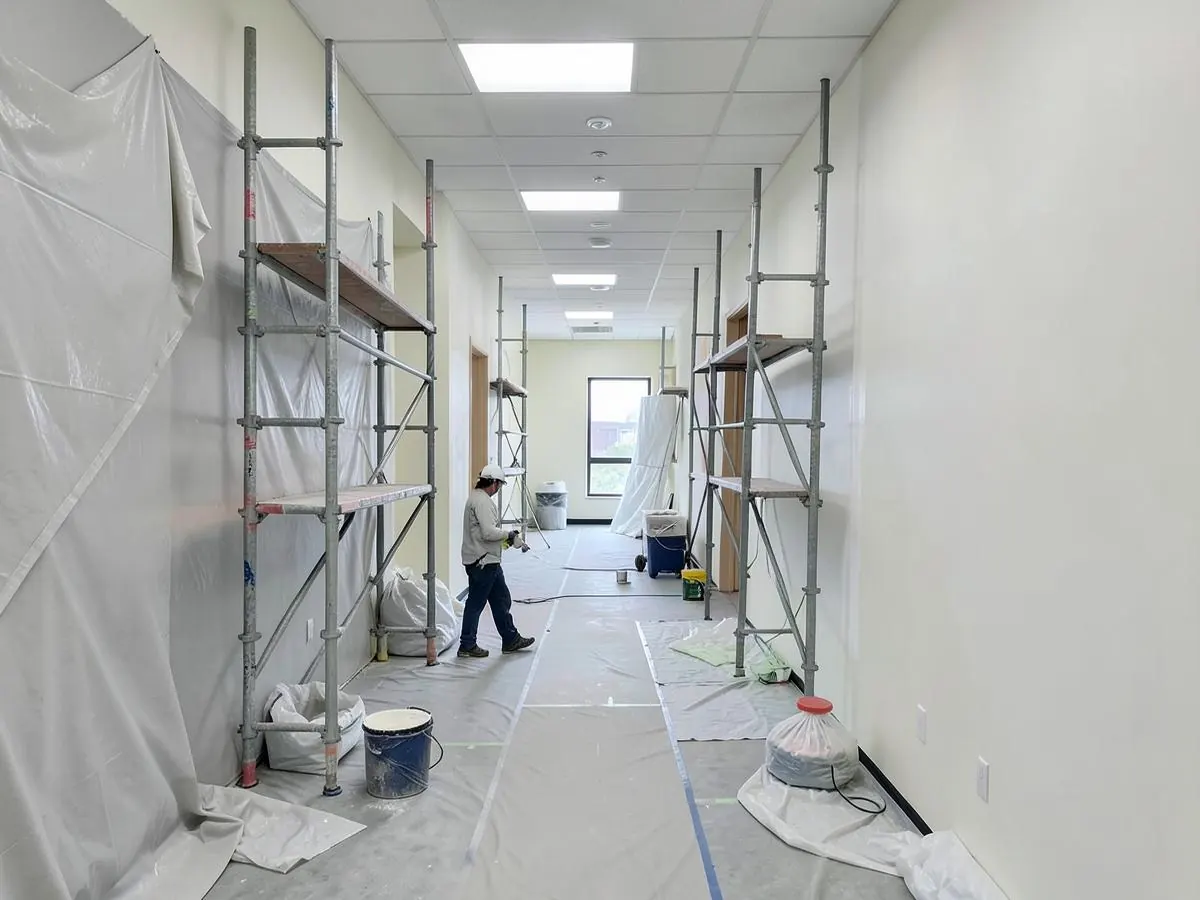
On a new build the painter arrives twice. The first visit follows the plasterers: ceilings and walls are sanded, joints are checked, and the sealer and first coats go on before kitchens, floors and fittings arrive, so the bulk of the spraying happens in an empty shell. The second visit comes after the cabinetry, doors, architraves and skirtings are fitted, when the trim is undercoated and enamelled, the walls are cut in and given their final coat, and every mark from the other trades is touched up. External render, cladding, eaves, fascias and doors are painted in between, timed to fit around scaffold and weather.
New plasterboard and fresh render need the right start. Plasterboard is sealed with a dedicated sealer undercoat so the paper face and the set joints take the topcoat evenly, and any flashing or joint show-through is dealt with before colour goes on. New render and lightweight cladding such as Hebel and blueboard are left to cure, then primed with a product that handles the alkalinity of fresh cement before the acrylic topcoats. New timber and MDF trim are primed, filled, sanded and enamelled. Rushing any of these steps shows up within a year as flaking, patchy sheen or joints telegraphing through the finish.
Builders judge painters on three things: turning up when the program says, leaving the site tidy for the next trade, and a finish that passes the client walk-through without a defects list. We plan the paint stages into your schedule, work to your colour schedule and site rules, and protect finished floors, benchtops and glazing while we work. On display homes, apartment stages and multi-unit developments we keep the same crew and the same products across every unit so the colour and sheen match from the first to the last.
Get a quote for new build painting
Send a few photos or book a site visit. We reply within one business day with a free, itemised written quote and no obligation.
Request a quoteWhat's included
What our new build painting service includes
The work that goes into the job before, during and after the paint goes on. Every item is spelled out on your quote.
Pricing from plans and colour schedule
We take off wall, ceiling and trim areas from your drawings and price each stage separately, so you can see the internal, external and trim components. Colour schedules from your selection consultant or client are followed to the letter, sheen levels included.
Plasterboard sanding and sealing
New plasterboard is sanded, dusted down and given a full sealer undercoat before the first colour coat. Flashing at set joints and screw heads is checked under a raking light and re-coated, so joints do not show through the finished ceiling.
Two topcoats on walls and ceilings
Ceilings get a flat ceiling paint and walls a low-sheen or washable acrylic, each in two coats over the sealer. Wet areas receive a mould-resistant paint. Colours are boxed from the same batch so large open-plan areas finish evenly.
Doors, frames, skirtings and architraves
New timber and MDF trim is primed, nail holes and joins are filled and sanded, gaps are caulked, and two coats of enamel are applied by brush and roller or spray. Door edges and tops are painted, not left raw.
External surfaces
Render, lightweight cladding, weatherboards, eaves, fascias, gutters, downpipes, external doors and garage doors are primed and finished in exterior 100% acrylic, in the colours on the schedule. Colorbond and pre-finished surfaces are masked and left untouched.
Protection of finished work
Floors, benchtops, tapware, glazing and appliances are covered before the trim and final coats go on. Overspray control and drop sheets are part of the job, and any mark we do make is fixed before we leave.
Touch-ups after the other trades
Once electricians, plumbers and floor layers have finished, we return to touch up scuffs and repair chips so the client sees a clean finish, not the history of the build. A tin of each colour is left on site for the builder.
Site clean-up
Masking, drop sheets and empty tins come away at every stage. Paint waste is disposed of correctly, brushes and rollers are cleaned off site, and the house is left swept and ready for the next trade or the final inspection.
Our process
How we approach new build painting
From first contact to the final walk-through, this is how a job runs with us.
- Step 01
Plans, schedule and quote
Send the plans, the colour schedule and your program dates and we will reply within one business day. Metro Adelaide jobs can be walked on site once the frame is up; regional builds are priced from the drawings first. You receive a free, itemised quote by stage.
- Step 02
Booking into the program
We lock in the sealer stage after plaster and the final stage after fit-off, and confirm the external stage around scaffold hire. If plaster or cabinetry runs late we shift with it, provided we hear about it early enough to reassign the crew.
- Step 03
First fix: sealing and first coats
Ceilings and walls are sanded, sealed and given their first colour coat while the house is empty. Externally, fresh render is left to cure for the period the manufacturer recommends before priming. A clean, dry site and a working power supply make this stage quick.
- Step 04
Second fix: trim and final coats
After doors, skirtings, architraves and cabinetry are fitted, the trim is filled, sanded, caulked and enamelled, walls receive their final coat and cutting in, and wet areas and feature colours are finished. External topcoats go on in dry weather above the minimum application temperature.
- Step 05
Touch-up and handover
We come back after the last trade to touch up, then walk the house with you or your supervisor under good light. Any defects on our list are fixed before the client inspection, and leftover paint is labelled by room and left on site.
Materials
Paints and systems we use
New surfaces need sealers and primers matched to the substrate, followed by trade-quality topcoats that will still look right when the house is sold.
Plasterboard sealer undercoats
A dedicated sealer undercoat evens out the porosity between the paper face and the set joints on new plasterboard, so the topcoat holds an even sheen. Skipping it and using a wall paint as the first coat is a common cause of flashing joints on new ceilings.
Low-VOC interior acrylics
Ceilings are finished in a flat acrylic that hides minor imperfections, walls in a low-sheen washable acrylic, and laundries, bathrooms and kitchens in a mould-resistant formulation. Low-VOC products from ranges such as Dulux, Taubmans and Haymes keep odour down for the trades still on site.
Water-based enamels for trim
Doors, skirtings and architraves are finished in water-based enamel as the default: it does not yellow like oil-based enamel, it dries faster between coats and it is low in odour. Oil-based enamel is still used where a builder or client asks for it on doors and hard-wearing trim.
Alkali-resistant primers for render and cladding
Fresh render, Hebel and cement-based sheeting hold alkalinity that will burn a standard paint. A masonry sealer or alkali-resistant primer is applied once the render has cured, then two coats of exterior acrylic go over it.
Exterior 100% acrylic topcoats
External walls, eaves and cladding get a UV-resistant 100% acrylic, chosen because it stays flexible as the new house settles and copes with the South Australian sun. Dark colours on weatherboards, steel and lightweight cladding run hotter, and we say so before they are locked into the schedule.
Primers for new timber and metal
New timber trim gets a stain-blocking primer so tannins do not bleed through white enamel. New galvanised steel, downpipes and metal frames are cleaned and primed with an etch or galvanised-iron primer before the topcoat, otherwise the paint peels off within a season.
Pricing
What affects the price of new build painting
Every quote is itemised, so you can see exactly where the money goes. These are the factors that move the number most.
Want a number for your job?
No two surfaces are in the same condition, so we quote each job properly rather than guessing. Send photos or book a site visit and we reply within one business day.
Get a free quote- 01
Floor area and ceiling height
Paintable wall and ceiling area drives the base price. Raked and double-height ceilings, voids and stairwells add scaffold or plank time, and a two-storey home adds external access as well.
- 02
Amount of trim
Doors, frames, skirtings, architraves, window reveals and shelving take far longer per metre than walls. A home with many internal doors, cavity sliders and detailed profiles costs more to enamel than an open-plan design.
- 03
Number of colours and sheens
A single wall colour throughout sprays quickly. Multiple wall colours, feature walls, coloured ceilings and separate trim colours each add cutting in, masking and extra tins, so the count of colours on the schedule matters.
- 04
External surfaces and cladding type
Rendered and lightweight cladding walls need sealing and two coats; Colorbond and brick need little or none. Weatherboards, eaves, fascias and timber posts are labour-heavy, and scaffold or a boom lift is needed on two-storey externals.
- 05
Program and staging
A clean two-stage program with the house empty for the first coat is the most efficient. Extra returns because trades overlap, or painting around fitted joinery and finished floors, add hours to the job.
- 06
Location
Regional builds across South Australia add travel, and sometimes accommodation, which is itemised in the quote. Several lots on the same estate or several units in one development are more efficient than a single remote house.
FAQ
New Build Painting questions
Straight answers to the questions we hear most about this service.
When should the painter be booked into the build program?
Do you work for owner-builders as well as volume builders?
Why do new ceilings sometimes show the joints after painting?
How long does painting a new house take?
Can you paint the outside of a new render before it has fully cured?
Do you follow the client's colour schedule exactly?
What do you leave on site at handover?
More from us
Other painting services
Service areas
Where we offer new build painting
Adelaide based and servicing all of South Australia, from the CBD and suburbs to the Hills, the coast and the regions. Choose your region to find your suburb page, or search for your suburb directly.
Ready to talk about new build painting?
Free, itemised quotes for homes and businesses across Adelaide and all of South Australia. Send the quote form and we will be in touch within one business day.