
Licensed interior painters
Interior Painting in Adelaide & South Australia
Interior painting covers walls, ceilings, doors, architraves, skirtings, windows and built-in cabinetry, from a single bedroom to a whole house. SA Painting Professionals paints interiors for homeowners, landlords, property managers and renovators across Adelaide and all of South Australia. We start with proper preparation, fill and sand every surface, protect floors and furniture, and apply trade-quality low-VOC acrylics and enamels so rooms are handed back clean, sharp and ready to use.
- Licensed and insured
- Free itemised quotes
- Trade-quality paints
What's included
- Furniture and floor protection
- Washing and sanding
- Filling and crack repair
- Caulking gaps at trim
- Priming and sealing
- LicensedLicensed & fully insured
- FreeItemised, no-obligation quotes
- 1,890+SA suburbs & localities serviced
- Trade-qualityPaints and coatings on every job
Overview
Interior Painting done properly
Most interior painting jobs fall into a few familiar situations: a full repaint before a house goes on the market, a rental refreshed between tenants, a new colour scheme after a renovation, or a single room that has copped years of scuffs and crayon. Whatever the reason, the work is the same. Furniture is moved to the centre of the room or out entirely and covered, floors are protected with drop sheets, and every surface is washed, filled, sanded and spot primed before the first colour coat goes on. Ceilings are painted first, then walls, then the trim, so each stage covers the overspray and roller marks of the one before it.
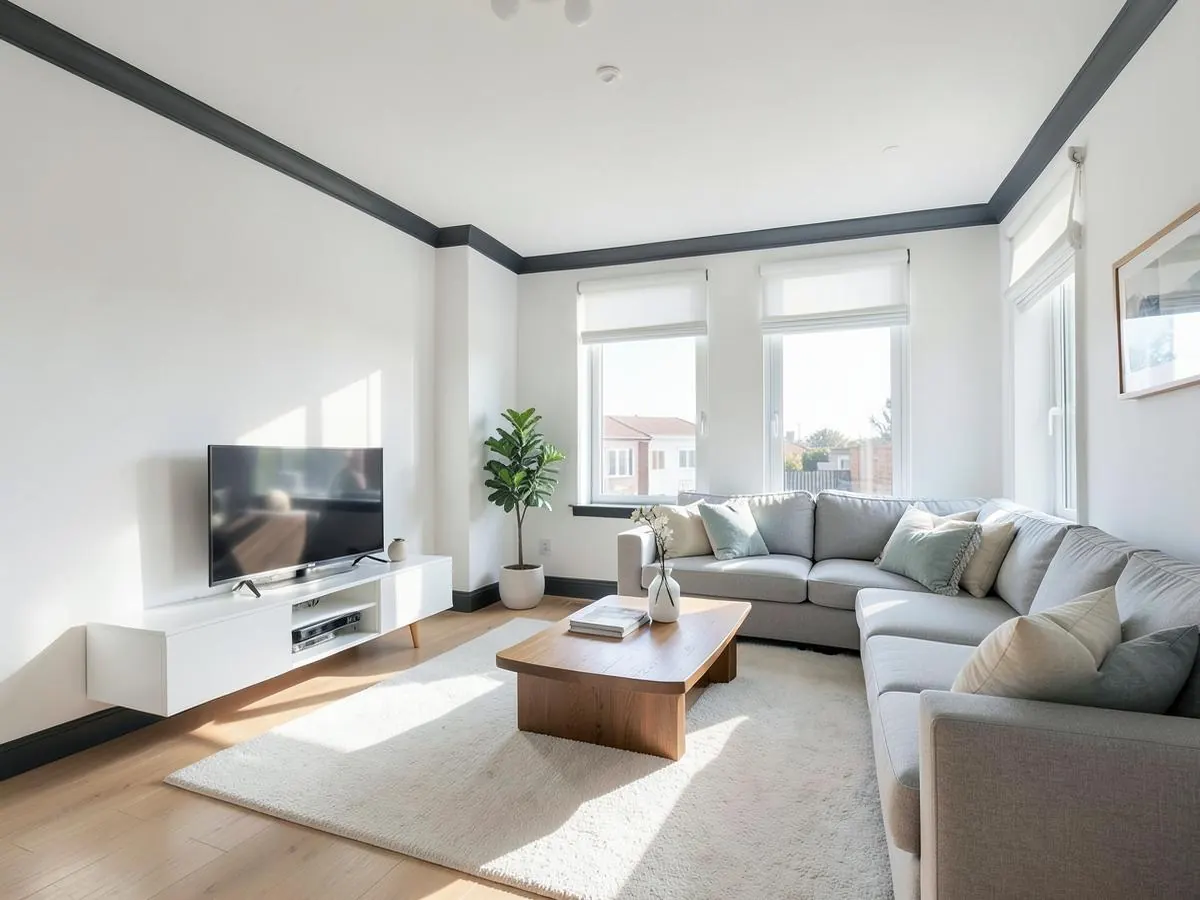
Good interior painting is easy to judge once it is finished. Cutting-in lines where walls meet ceilings and trim are straight and crisp. Walls have an even sheen with no roller lap marks, patchy spots or missed corners behind doors. Filled holes and repaired cracks disappear under the paint rather than showing as bumps or dull patches. Doors and skirtings have a smooth enamel finish without brush marks, runs or dust nibs. Light switches, power points and door hardware are either removed or masked cleanly, never painted over. We work to AS/NZS 2311, the Australian guide to the painting of buildings, on every interior.
Scheduling matters when people are living in the house. We work room by room so you always have somewhere to sit and sleep, and we tell you each morning which rooms will be out of action. Low-odour, low-VOC water-based paints mean bedrooms can usually be slept in the same night. On rental properties we can coordinate with your property manager and work to a vacancy window between tenants. Each day ends with tools packed away, drop sheets folded and floors vacuumed, and the final handover includes a walk-through in good light so any touch-ups are done before we leave.
Get a quote for interior painting
Send a few photos or book a site visit. We reply within one business day with a free, itemised written quote and no obligation.
Request a quoteWhat's included
What our interior painting service includes
The work that goes into the job before, during and after the paint goes on. Every item is spelled out on your quote.
Furniture and floor protection
Furniture is moved to the centre of the room or out entirely and covered with clean plastic and drop sheets. Floors, benchtops and fixed joinery are protected with drop sheets and masking, and door hardware and switch plates are removed or masked before painting starts.
Washing and sanding
Walls and ceilings are washed with sugar soap to remove grease, nicotine and hand marks that stop paint from adhering. Glossy trim is sanded back to a key so new enamel bonds properly, and dust is vacuumed and wiped off before any coating goes on.
Filling and crack repair
Nail holes, dents and picture hook marks are filled and sanded flush. Cracks at cornices and along plasterboard joints are raked out, filled with a flexible compound and taped where the joint is likely to move again, then sanded smooth so they disappear under the paint.
Caulking gaps at trim
Gaps between skirtings, architraves and walls are caulked with a paintable acrylic sealant so the finished edges read as one clean line. Old, cracked caulk is cut out and replaced rather than painted over, because paint alone will not hide a shrunken joint.
Priming and sealing
New plasterboard, patched areas and bare timber are primed or sealed so the topcoats dry evenly and do not flash at the patches. Water marks and stained ceilings get a stain-blocking primer so the marks do not bleed through the new colour.
Ceilings and walls, two coats
Ceilings are cut in and rolled in a flat finish, then walls receive two full coats of low-sheen or matt acrylic, brushed at the edges and rolled for an even texture. Big colour changes and dark shades are coated until they are solid, not left thin.
Doors, trim and windows
Doors, architraves, skirtings, window frames and built-in cupboards are sanded, undercoated where needed and finished in two coats of water-based or oil-based enamel, laid off with the brush so marks level out and the surface wipes clean.
Colour and sheen advice
We help you choose wall colours, sheens and ceiling whites that suit the light in each room, and we can apply sample patches on the wall so you see the colour in your own light, morning and evening, before committing to the whole house.
Daily clean-up and handover
Each day ends with the work area tidied and floors vacuumed. At the end of the job masking comes off, hardware goes back on, rooms are cleaned and we walk through with you in good light to catch any touch-ups before we leave.
Our process
How we approach interior painting
From first contact to the final walk-through, this is how a job runs with us.
- Step 01
Enquiry and quote
Send photos or a few details through the quote form and we reply within one business day. In metro Adelaide we visit to measure rooms, check surfaces and talk colours; for regional work we quote from plans and photos first. You receive a free, itemised, written quote.
- Step 02
Colours and booking
Once you accept, we confirm colours, sheens and any repairs, and lock in dates. If you are unsure on colour we can apply sample patches before the job starts. Rental turnarounds and pre-sale repaints are scheduled to your deadline.
- Step 03
Preparation
On the first day we protect furniture and floors, then wash, fill, sand, caulk and prime. On an older home with peeling paint, or where plaster repairs are needed, preparation can take as long as the painting itself. We do not skip it.
- Step 04
Painting
Ceilings go on first, then walls, then trim and doors. Each coat is left to dry properly before the next, so a full interior usually runs over several days rather than being rushed into one, and rooms are finished in sequence.
- Step 05
Handover
We remove masking, refit hardware, clean the rooms and walk through with you. Any touch-ups are done on the spot. We leave the labelled leftover paint so future marks can be touched up in the right colour and sheen.
Materials
Paints and finishes we use inside
Interior paint is chosen by room, surface and how hard it will be used.
Low-VOC interior acrylics
Water-based, low-odour acrylics for walls, such as Dulux Wash&Wear, Taubmans Endure or Haymes Expressions. They dry fast, wash clean and let a family stay in the house while we paint. Matt hides imperfections; low sheen wipes down better in kitchens and hallways.
Flat ceiling whites
Flat ceiling paints are formulated to hide roller marks and diffuse light across a ceiling. We use a dedicated ceiling paint rather than wall paint overhead, and a mould-resistant version in bathrooms, laundries and the shaded rooms of Adelaide Hills homes.
Water-based enamels for trim
Modern water-based enamels give doors, skirtings and architraves a hard, non-yellowing finish with far less odour than traditional oil-based enamel. They are our default for trim in occupied homes and dry fast enough to recoat the same day.
Oil-based enamels
Oil-based enamels still have a place: they level out beautifully on doors and hold up on high-wear surfaces such as stair handrails. They yellow slightly over time and need longer drying, so we use them where the extra hardness is worth it.
Primers, sealers and undercoats
New plasterboard gets a sealer undercoat so the topcoat sheen is even. Bare timber and MDF are primed. Water, smoke and marker stains get a shellac or oil-based stain blocker. Glossy surfaces get an adhesion primer instead of relying on sanding alone.
Kitchen and wet-area paints
Kitchens, bathrooms and laundries take a washable low-sheen or semi-gloss acrylic with mould inhibitors, applied over a suitable primer, so steam, splashes and cooking grease wipe off without wearing through the finish or leaving shiny patches.
Pricing
What affects the price of interior painting
Every quote is itemised, so you can see exactly where the money goes. These are the factors that move the number most.
Want a number for your job?
No two surfaces are in the same condition, so we quote each job properly rather than guessing. Send photos or book a site visit and we reply within one business day.
Get a free quote- 01
Number and size of rooms
Floor area and ceiling height set the base quantity of wall and ceiling surface. High ceilings, stairwells and voids add plank or scaffold work and slow the cutting-in.
- 02
Condition and preparation
Sound, previously painted walls need a wash, light sand and fill. Peeling paint, cracked plaster, water damage, wallpaper removal or heavy nicotine staining add preparation days, and preparation is where most of the time in a repaint goes.
- 03
Trim, doors and windows
Doors, architraves, skirtings and window sashes are brushed by hand and take longer per square metre than rolled walls. A room with many doors, panelled joinery or multi-pane windows costs more than a plain room with one door.
- 04
Colour changes and dark colours
A like-for-like refresh in a similar colour covers in two coats. Going from a dark colour to a pale one, or painting deep reds, blues or blacks, can need a tinted undercoat and a third coat to reach a solid finish.
- 05
Number of colours
Every extra colour means extra cutting-in, masking and cleaning of tools. One wall colour and one trim colour throughout is the most efficient; a different colour and feature wall in every room takes longer.
- 06
Occupied or empty
An empty house lets us set up once and move quickly. Painting around furniture, working room by room and packing up each day for a family in residence is slower, though we plan for it and it is very common.
- 07
Access and timing
Stairwells, voids over entries and two-storey ceilings need planks or a mobile scaffold. A fixed deadline such as a settlement date or a tenant move-in may mean more painters on site at once.
FAQ
Interior Painting questions
Straight answers to the questions we hear most about this service.
How long does interior painting take?
Can we stay in the house while you paint?
Do I need to move furniture before you arrive?
How many coats will you apply?
What sheen should I use on walls?
Can you paint over wallpaper?
Is old paint in my home a lead risk?
Can you fix cracks and holes before painting?
More from us
Other painting services
Service areas
Where we offer interior painting
Adelaide based and servicing all of South Australia, from the CBD and suburbs to the Hills, the coast and the regions. Choose your region to find your suburb page, or search for your suburb directly.
Ready to talk about interior painting?
Free, itemised quotes for homes and businesses across Adelaide and all of South Australia. Send the quote form and we will be in touch within one business day.