
Licensed restoration painters
Repaints & Restoration in Adelaide & South Australia
Repaints and restoration is the work of bringing an existing home back: stripping peeling and sun-damaged paint, repairing timber, render and plaster, managing old lead paint safely and repainting so the house looks cared for again. It suits owners of older homes, landlords with tired rentals, and anyone preparing a property for sale. SA Painting Professionals treats preparation as the job itself, matches products to the original materials, and repaints stone villas, bungalows, post-war brick homes and 1970s fibro with the same care.
- Licensed and insured
- Free itemised quotes
- Trade-quality paints
What's included
- Condition inspection and paint testing
- Washing and mould treatment
- Stripping and sanding failed paint
- Timber repairs
- Render, masonry and plaster repairs
- LicensedLicensed & fully insured
- FreeItemised, no-obligation quotes
- 1,890+SA suburbs & localities serviced
- Trade-qualityPaints and coatings on every job
Overview
Repaints & Restoration done properly
A repaint is rarely just paint. On an older South Australian home the previous coats have chalked, cracked or lifted, the timber under them has weathered, the render has cracked at movement points and the plaster ceilings have sagged or crazed. Restoration painting deals with all of that before colour goes on. We wash the surfaces, strip back what has failed, sand the sound paint to a feathered edge, replace or splice rotten timber, fill and reinforce cracked render with flexible fillers, and prime everything bare. Only then does the house get its two topcoats. The result should look like new paint on a well-kept house, not fresh paint over old problems.
The housing stock across the state sets the work. Bluestone, sandstone and limestone villas and cottages from the 1850s to the 1910s in inner Adelaide, Port Adelaide, the Copper Coast, Burra and Mount Gambier have lime mortar, timber fretwork, return verandahs and multiple layers of old paint. Federation and 1920s bungalows have wide eaves, timber windows and rendered piers. Post-war double brick and 1960s brick veneer and fibro homes have their own quirks, and 1980s render on reactive clay soil cracks with the seasons. Each material needs its own preparation and its own primer, and the sequence of the work changes with the house.
Homes built before 1970 are likely to carry lead-based paint under later coats, and paint made before 1965 could contain up to 50% lead. We manage it to AS/NZS 4361.2:2017: sound lead paint is left undisturbed and overcoated, and where it has to come off we wet sand or chemically strip inside containment, never dry sand or burn it off, and clean up carefully. Pre-1990 fibro sheeting is asbestos cement and is never sanded or water-blasted; intact sheets are cleaned gently and painted. These are not optional steps, and they are priced into the quote so there are no surprises on site.
Restoration work is scheduled around the house and the weather. Exteriors are washed and stripped in dry weather, primed the same day bare timber is exposed, and topcoated when the surface is dry and out of direct summer heat. Inside, rooms are cleared or furniture is moved to the centre and covered, floors are sheeted and the work is sequenced room by room so the house stays liveable. Gardens, paths and neighbouring properties are protected from stripping debris and wash-down, and every day ends with the site tidy.
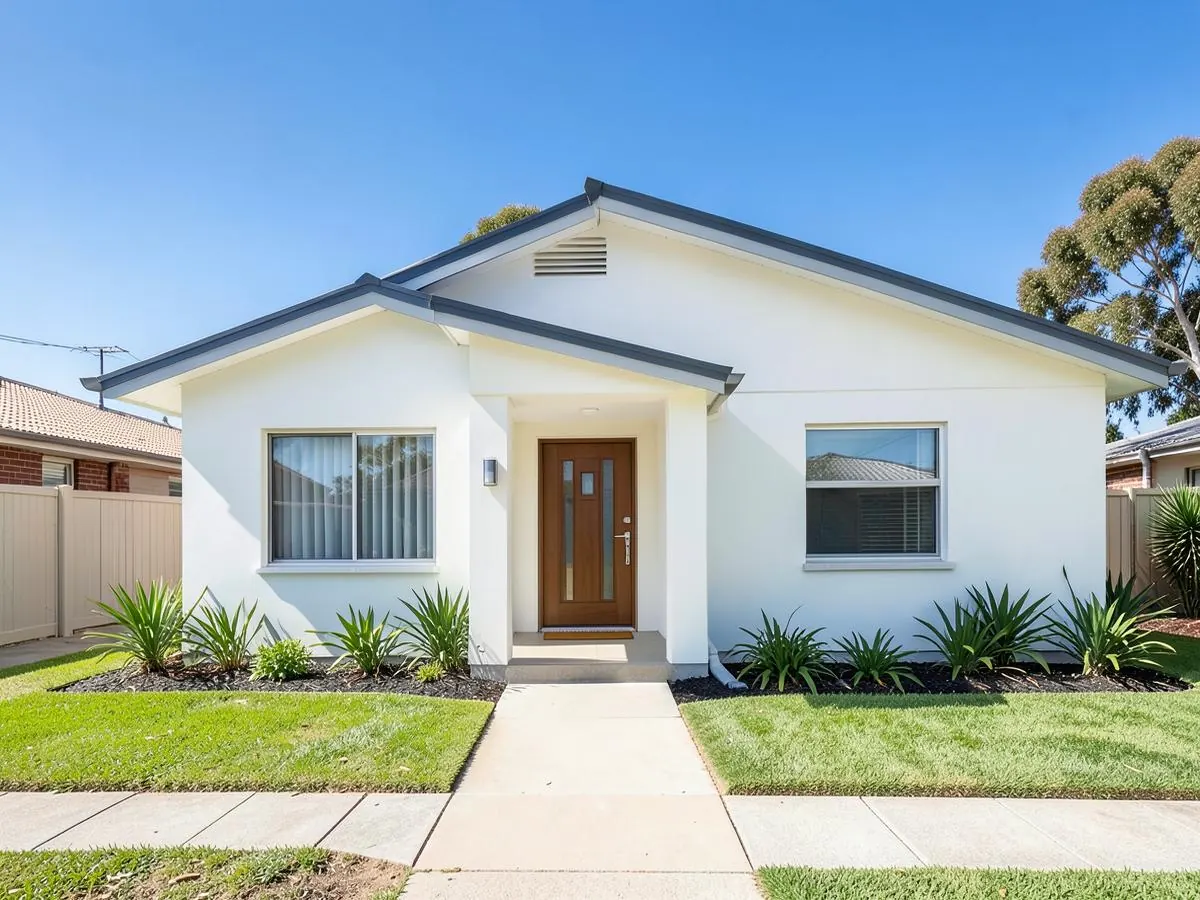
Get a quote for repaints and restoration
Send a few photos or book a site visit. We reply within one business day with a free, itemised written quote and no obligation.
Request a quoteWhat's included
What our repaints and restoration service includes
The work that goes into the job before, during and after the paint goes on. Every item is spelled out on your quote.
Condition inspection and paint testing
We inspect every surface, check adhesion of the existing paint, probe timber for rot, tap render for drummy patches and test older homes for lead paint. The findings decide what is stripped, what is overcoated and what is replaced, and they are written into the quote.
Washing and mould treatment
Exteriors are pressure washed at a pressure the surface can take, or hand washed where old render, stone and fibro cannot. Mould and mildew on shaded walls, eaves and timber are treated with an anti-mould wash and left to dry before any sanding or priming.
Stripping and sanding failed paint
Peeling, blistered and chalky paint is scraped, wet sanded or chemically stripped back to a sound edge and feathered so the old and new surfaces meet flush. Sound paint is sanded to a key. Old lead paint is contained and handled to AS/NZS 4361.2.
Timber repairs
Rotten weatherboards, sills, fretwork, verandah posts and fascia are cut out and spliced or replaced with matching profiles. Soft spots are hardened and filled with two-pack timber filler, nail heads are punched and sealed, and open joints are re-caulked.
Render, masonry and plaster repairs
Cracked render is raked out, filled with flexible filler and, where the cracking is widespread, coated with an elastomeric membrane. Drummy patches are cut out and re-rendered. Inside, cracked and crazed plaster ceilings and walls are patched, skimmed and sanded flat.
Priming and sealing bare surfaces
Every bare or repaired area gets the primer that suits it: stain-blocking primer on timber, alkali-resistant sealer on render and masonry, metal primer on rusted gutters and downpipes, and a bonding primer over chalky or glossy old paint so the topcoat holds.
Two full topcoats
Walls, ceilings, trim and external surfaces receive two coats of trade-quality paint in the colours you choose, applied by brush, roller or spray to suit the surface. Heritage colour schemes are matched where you want the house kept in period.
Protection and clean-up
Floors, furniture, gardens, paths, glazing and neighbouring boundaries are covered before stripping starts. Debris is collected daily, lead paint waste is bagged and disposed of correctly, and the house is handed back clean with masking removed and windows opening freely.
Our process
How we approach repaints and restoration
From first contact to the final walk-through, this is how a job runs with us.
- Step 01
Enquiry and inspection
Send photos and a description of the house and we will reply within one business day. In metro Adelaide we inspect on site, checking every surface and testing for lead where the age of the home calls for it. Regional homes are quoted from photos first and confirmed on a visit.
- Step 02
Itemised quote and scope
You receive a free, written quote that lists the repairs, the stripping method, lead paint management where needed, the primer and topcoat system and the number of coats for each surface. If the budget is tight we show what can be staged and what should not wait.
- Step 03
Preparation
Washing, stripping, sanding, timber and render repairs and priming take most of the time on a restoration job. Bare timber is primed the same day it is exposed. We do not shortcut this stage, because it is what decides whether the repaint lasts.
- Step 04
Painting
Two topcoats go on once the preparation is signed off and the surfaces are dry. Outside, we work around rain and avoid painting in direct summer heat above the product's limit. Inside, rooms are done in sequence so you keep the use of most of the house.
- Step 05
Walk-through and handover
We walk every surface with you under good light, fix anything on the list, remove protection and leave labelled leftover paint. You get a note on curing times and on which surfaces, such as decks and south-facing timber, will need recoating sooner than the rest.
Materials
Paints and systems we use
Older surfaces need primers matched to what is underneath, and topcoats that flex, breathe and stand up to the South Australian sun.
Stain-blocking and bonding primers
Oil-based or shellac-based stain blockers seal tannin bleed from old timber, water stains on ceilings and nicotine on walls. Bonding primers grip chalky, glossy or previously enamelled surfaces that a standard undercoat would slide off, which is common on older trim.
Exterior 100% acrylic topcoats
Weatherboards, render, eaves and trim are finished in UV-resistant 100% acrylic from trade ranges such as Dulux, Taubmans, Haymes and Wattyl. Acrylic stays flexible as old timber moves with the seasons, where brittle older coatings cracked and let water in.
Elastomeric membrane coatings for cracked render
On rendered and masonry walls that have cracked with soil movement, a high-build elastomeric membrane bridges hairline cracks and stretches as the wall moves. It is applied over filled cracks and a sealer, and it suits 1980s render across the Adelaide plains.
Breathable coatings for stone and lime mortar
Stone villas and cottages with lime mortar need coatings that let moisture escape. Where painted stone, render or mortar is to be recoated we use breathable masonry paints rather than sealing the wall with a film that traps damp and blows the finish off.
Enamels for windows, doors and trim
Water-based enamel is the default on restored trim because it does not yellow and dries quickly. Oil-based enamel is still chosen for heavily handled doors and for period gloss finishes, and on old oil-based trim a bonding coat goes on first so the new enamel adheres.
Interior low-VOC acrylics
Restored plaster walls and ceilings are finished in low-VOC acrylics: flat for ceilings, low-sheen washable for walls and mould-resistant paint for bathrooms, laundries and cooler south-facing rooms in the Hills and South East where mildew is a regular problem.
Pricing
What affects the price of repaints and restoration
Every quote is itemised, so you can see exactly where the money goes. These are the factors that move the number most.
Want a number for your job?
No two surfaces are in the same condition, so we quote each job properly rather than guessing. Send photos or book a site visit and we reply within one business day.
Get a free quote- 01
Condition of the existing paint
Sound paint that only needs washing and sanding is quick. Widespread peeling, blistering and chalking means stripping, and stripping is where the hours go. The inspection tells us how much of each surface has to come back.
- 02
Lead paint and asbestos management
Homes built before 1970 are treated as containing lead paint, so any stripping is done wet, inside containment, with controlled clean-up and disposal, which takes longer than ordinary sanding. Fibro sheeting changes the preparation method entirely, since it cannot be sanded or water-blasted.
- 03
Timber, render and plaster repairs
Rotten weatherboards, sills and fretwork, drummy or cracked render and damaged plaster ceilings are repaired before painting, and the extent of that repair work is often the biggest difference between one old house and the next.
- 04
Access and height
Two-storey walls, high gables, return verandah roofs and steep blocks need scaffold, planks or a boom lift, and working from them is slower than working from the ground. Access to all sides of the house also matters.
- 05
Amount of detail and trim
Fretwork, finials, timber windows with many panes, panelled doors and ornate cornices are brush work, not spray work. A plain post-war brick veneer with painted eaves and trim is much faster than a villa with a full return verandah.
- 06
Number of colours and heritage matching
Traditional three-colour schemes with separate body, trim and accent colours add cutting in and masking. Matching or recreating a period scheme takes sampling and sometimes custom tinting.
- 07
Interior scope and occupancy
Painting a whole house while it is lived in means moving and covering furniture, working room by room and repeated set-up. An empty house between tenants or before sale is faster to paint.
FAQ
Repaints & Restoration questions
Straight answers to the questions we hear most about this service.
How do you deal with lead paint on an older home?
Can you just paint over peeling paint?
Do you repair rotten weatherboards and timber before painting?
What about fibro homes from the 1960s and 1970s?
Can you repaint my stone villa in the original colours?
How long does an exterior restoration take?
Why has the render on my house cracked, and will paint fix it?
Is it worth restoring the paint before selling?
More from us
Other painting services
Service areas
Where we offer repaints and restoration
Adelaide based and servicing all of South Australia, from the CBD and suburbs to the Hills, the coast and the regions. Choose your region to find your suburb page, or search for your suburb directly.
Ready to talk about repaints and restoration?
Free, itemised quotes for homes and businesses across Adelaide and all of South Australia. Send the quote form and we will be in touch within one business day.