Licensed protective coatings applicators
Protective & Specialty Coatings in Adelaide & South Australia
Protective and specialty coatings are the systems you reach for when ordinary paint is not enough: epoxy and polyurethane floors, waterproofing and crack-bridging membranes, anti-graffiti and anti-slip coatings, and specialty finishes for concrete, steel and render. They suit homeowners with a garage or balcony to protect, strata and facility managers keeping a building dry and clean, and businesses with floors that take real punishment. SA Painting Professionals matches the system to the surface and the exposure, prepares the substrate to suit, and applies it to the manufacturer's data sheet.
- Licensed and insured
- Free itemised quotes
- Trade-quality paints
What's included
- Substrate testing
- Floor preparation by grinding or blasting
- Crack, spall and joint repair
- Priming and moisture control
- Application to the data sheet
- LicensedLicensed & fully insured
- FreeItemised, no-obligation quotes
- 1,890+SA suburbs & localities serviced
- Trade-qualityPaints and coatings on every job
Overview
Protective & Specialty Coatings done properly
The difference between paint and a protective coating is what it is asked to do. Paint gives colour and a clean finish. A protective coating has to stop water getting through cracked render, keep forklift tyres and dropped tools from wearing a floor through, let graffiti wash off a wall, or give a wet ramp enough grip to walk on. Most of these products are two-pack epoxies, polyurethanes or high-build elastomeric membranes, and they behave differently from house paint: they have pot lives, strict recoat windows and cure times, and they do not forgive a damp or dusty surface. Getting the preparation right and following the data sheet is the whole job.
Typical work includes garage, workshop and commercial kitchen floors in epoxy or polyurethane, waterproofing membranes on balconies, planter boxes and parapets, elastomeric coatings over cracked render on Adelaide's reactive clay soils, anti-graffiti coatings on shopfronts, fences and strata common walls, anti-slip coatings on ramps, stairs and pool surrounds, and corrosion-resistant systems on gates, handrails and exposed steel. On coastal sites from Semaphore to Sellicks and around the Yorke and Eyre Peninsulas, salt spray adds another layer of exposure, so primers and topcoats are chosen for a marine environment rather than a dry inland one.
Good work in this field looks like an even, well-bonded film at the right thickness, with no pinholes, roller marks or dry spray, on a surface that was tested before anything went on it. We check concrete for moisture and existing coatings for adhesion, grind or blast floors to open the surface, and repair cracks and spalls before priming. Wet film thickness is measured as we go. Cars, plant, stock and furniture are moved or sheeted, walkways are taped off and signed, and the work is programmed around cure times so nobody walks or drives on a floor before it is ready.
Get a quote for protective coatings
Send a few photos or book a site visit. We reply within one business day with a free, itemised written quote and no obligation.
Request a quoteWhat's included
What our protective coatings service includes
The work that goes into the job before, during and after the paint goes on. Every item is spelled out on your quote.
Substrate testing
Before we recommend a system we test what it will be going onto. Concrete slabs are checked for moisture and surface hardness, existing coatings are cross-cut and tested for adhesion, and render and masonry are tapped for drummy patches. A coating applied over a damp or loose surface will fail, so this step is never skipped.
Floor preparation by grinding or blasting
Concrete floors are diamond ground or shot blasted to remove laitance, old sealers and contamination and to leave a profile the primer can key into. Oil and grease are degreased first. Acid etching alone does not give a reliable bond on garage or workshop floors, so we do not rely on it.
Crack, spall and joint repair
Cracks are raked out and filled with epoxy or flexible filler to suit the movement, spalled concrete is rebuilt with repair mortar, and control joints are cleaned and sealed. On cracked render we open the crack, fill it with a flexible compound and bridge it with the membrane coating rather than painting over it.
Priming and moisture control
Every system starts with the primer the manufacturer specifies for that substrate: a penetrating epoxy primer on concrete, a moisture-tolerant primer where slab readings are high, a corrosion-inhibiting primer on steel, or a masonry sealer under a membrane. The primer decides whether the coats above it stay put.
Application to the data sheet
Two-pack products are mixed at the ratio the data sheet states, applied within their pot life and recoated inside the recoat window. Wet film thickness is checked with a gauge so the finished coating reaches the build that gives it its performance. Temperature and humidity are monitored during application.
Anti-slip finishes
Ramps, stairs, wet areas, pool surrounds and walkways have anti-slip aggregate broadcast into or mixed with the coating so the finished surface has the grip the area needs. We advise on the level of texture for each location, with slip resistance for pedestrian surfaces assessed under AS 4586.
Protection of the site
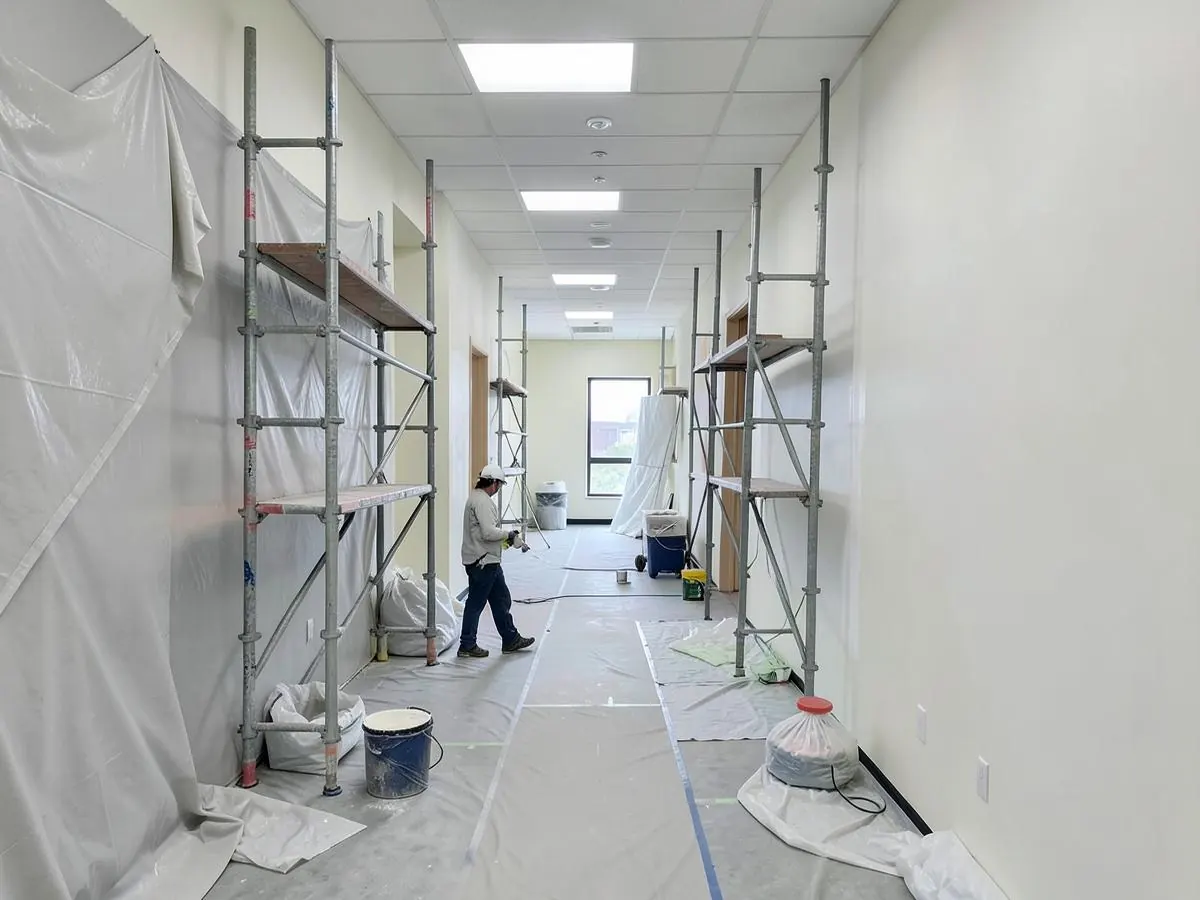
Cars, plant, stock and furniture are moved or sheeted, adjoining walls and floors are masked, and work zones are barricaded and signed. Two-pack products have strong odours during application, so we ventilate, use low-odour options where people stay on site, and program the work around occupants.
Cure, clean-up and handover
Masking is removed, waste and empty tins are taken away, and the area is left clean. We tell you in writing when the coating takes foot traffic, when it takes vehicles or furniture, and when it reaches full hardness, along with how to clean and maintain it so it lasts.
Our process
How we approach protective coatings
From first contact to the final walk-through, this is how a job runs with us.
- Step 01
Enquiry and inspection
Send through photos, plans or a description of the problem and we reply within one business day. In metro Adelaide we inspect on site, testing the substrate and noting the exposure. For regional work across South Australia we quote from photos and drawings first, then confirm on site.
- Step 02
System recommendation and itemised quote
Your free quote names the system we recommend, primer through topcoat, the preparation method and the number of coats. If an engineer, architect or body corporate has issued a specification we price to it. If not, we explain why we have chosen one product over another.
- Step 03
Booking and site set-up
We agree dates that suit you, which for commercial floors and car park areas often means weekends or after hours. Protection goes down, the area is cleared and barricaded, and access equipment is arranged for high walls or parapets before any preparation starts.
- Step 04
Preparation and repairs
Floors are ground or blasted, walls are washed and repaired, steel is cleaned back to sound metal and cracks are filled. Preparation takes as long as it takes. Damp weather, cold mornings or a slab that reads wet can push the start of coating back a day, and we tell you if that happens.
- Step 05
Coating application
Primer, build coats and topcoat go on in sequence within the recoat windows. Most two-pack products need dry conditions and moderate temperatures, so summer work is done early in the day and exterior membranes are not applied when rain is forecast. Film thickness is checked as each coat goes on.
- Step 06
Cure and handover
Cure times depend on the product and the weather and are stated clearly before we leave. We walk the finished job with you, remove protection and waste, and confirm when the surface can return to normal use. Driving or loading a floor early is the most common cause of damage.
Materials
Coating systems we use
Every protective coating is chosen as a system, primer to topcoat, to suit the surface and what it has to withstand.
Two-pack epoxy floor coatings
High-build epoxies bond hard to prepared concrete and resist oil, chemicals, abrasion and hot tyres, which makes them the standard for garages, workshops, warehouses and commercial kitchens. They come in solid colours or with decorative flake broadcast into the wet coat. Epoxies chalk in direct sun, so outdoor floors get a UV-stable topcoat.
Polyurethane topcoats
Two-pack polyurethanes hold colour and gloss under South Australian UV and give floors a hard, cleanable wearing surface. They finish exterior steel, outdoor floors and high-traffic interiors over an epoxy base. Water-based polyurethanes give a lower-odour option for occupied buildings and homes.
Elastomeric and waterproofing membranes
High-build acrylic membranes stretch and recover as walls move, bridging hairline cracks in render and masonry on reactive clay soils. Trafficable polyurethane and cementitious membranes waterproof balconies, planter boxes, parapets and retaining walls, and are often finished with a UV-stable coating or an anti-slip surface.
Anti-graffiti coatings
Sacrificial coatings are clear waxes or acrylics that wash off with the graffiti and are reapplied afterwards, which suits heritage masonry and brick. Permanent coatings are clear or pigmented polyurethanes and siloxanes that let paint and marker be removed with a solvent wipe or pressure wash, again and again.
Anti-slip and safety coatings
Epoxy and polyurethane coatings with aluminium oxide or silica aggregate give ramps, stairs, loading docks and wet areas a textured surface. Safety yellow, hazard stripes and walkway colours are applied in the same hard-wearing products so the markings last as long as the floor they sit on.
Corrosion-resistant systems for steel
Gates, balustrades, handrails, columns and exposed steelwork get a corrosion-inhibiting or zinc-rich primer followed by epoxy and polyurethane coats, chosen for the environment along the lines of AS/NZS 2312.1. Coastal properties get marine-grade systems because salt spray attacks ordinary enamel quickly.
Heat-reflective and specialty finishes
Heat-reflective coatings on roofs and west-facing walls lower surface temperatures in summer. Specialty finishes include texture coatings for render, whiteboard and blackboard paints, metallic finishes for feature areas and anti-mould coatings for cool, shaded walls. Where a specification calls for APAS-approved products we supply them, from ranges such as Dulux Protective Coatings and Wattyl.
Pricing
What affects the price of protective coatings
Every quote is itemised, so you can see exactly where the money goes. These are the factors that move the number most.
Want a number for your job?
No two surfaces are in the same condition, so we quote each job properly rather than guessing. Send photos or book a site visit and we reply within one business day.
Get a free quote- 01
Area and layout
Large open floors and long walls are efficient to coat. Small or cut-up areas, stairs, plant rooms, edges and upstands take more time per square metre because of masking, detailing and hand work.
- 02
Condition and preparation
A floor with old sealer, paint, oil or a failed coating needs more grinding or blasting than clean new concrete. Cracked, spalled or drummy substrates need repair before anything goes on, and that repair is itemised.
- 03
Moisture in the slab
Slabs with high moisture readings need a moisture-tolerant or barrier primer, which costs more than a standard epoxy primer. It is far cheaper than a floor that blisters and lifts six months later.
- 04
System and number of coats
A single-coat sealer, a two-coat epoxy, a three-coat polyurethane system and a flake floor with a clear topcoat all sit at different points on the scale. Anti-slip aggregate, membranes and anti-graffiti products add material cost.
- 05
Access and height
Parapets, balconies, high walls and facades need scaffold or elevated work platforms, which are hired for the duration of the job. Ground-level floors and walls need none, which keeps the labour to the coating itself.
- 06
Working around occupants or trading
Weekend and after-hours work, staged areas and extra ventilation for occupied buildings add hours. A clear, empty space during normal hours is the quickest and cheapest way to get the job done.
- 07
Location
Regional and remote work across South Australia adds travel, which we itemise. Combining several jobs at one site, such as a floor, line marking and steel, usually costs less than separate visits.
FAQ
Protective & Specialty Coatings questions
Straight answers to the questions we hear most about this service.
Is an epoxy floor a good choice for a home garage?
How long before I can walk or drive on a new floor coating?
Will a membrane coating fix cracked render?
What is the difference between sacrificial and permanent anti-graffiti coatings?
Can you make a ramp, stairs or pool surround less slippery?
Do you apply intumescent or fire-rated coatings?
Do you work on coastal and regional properties?
More from us
Other painting services
Service areas
Where we offer protective coatings
Adelaide based and servicing all of South Australia, from the CBD and suburbs to the Hills, the coast and the regions. Choose your region to find your suburb page, or search for your suburb directly.
Ready to talk about protective coatings?
Free, itemised quotes for homes and businesses across Adelaide and all of South Australia. Send the quote form and we will be in touch within one business day.